Misheard. Misunderstood. Misdiagnosed?
According to the World Health Organisation approximately 466 million people have a hearing loss that is considered disabling. Of the 466 million, 34 million are children. In 2009 it was recorded that between 4 to 6 of every 1000 babies born within the public sector in South Africa will have a hearing impairment.
While we do not know exactly how these statistics have changed today, we do know that an undiagnosed hearing loss– even a mild hearing loss- decreases a child’s academic performance at school. In addition, this hearing loss causes a multitude of socio-emotional difficulties.
A child with a hearing loss in the classroom will :
- frequently ask for repetition
- inappropriately respond to questions
- present with speech difficulties and language delays
- struggle to follow instructions
- present with a general restlessness or lack of concentration on the task required
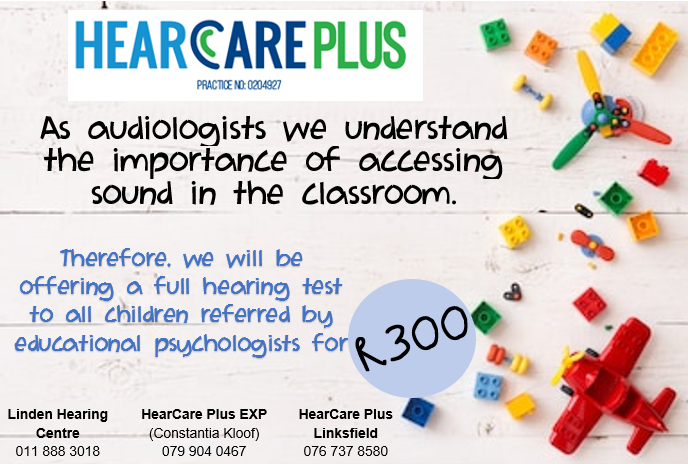
These symptoms may initially look like a learning problem such as ADHD. Annual hearing screenings for all learners and full hearing tests for individuals struggling in their academic performance is therefore essential. These assessments not only prevent a misdiagnosis, but they allow for the appropriate intervention to improve school success and ultimately a learner’s individual growth and happiness.